

Wu Lei’s photoshoot and interview for 'Motherland' (祖国杂志)2026-04-14
Chinese drama release schedule for 2026 


For the English version, we use automatic translation with minor editing. We apologize to our dear readers for any errors. | |
|
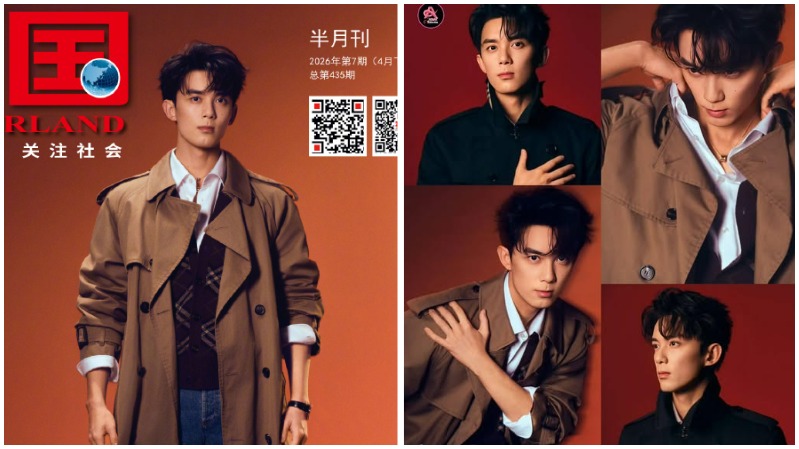
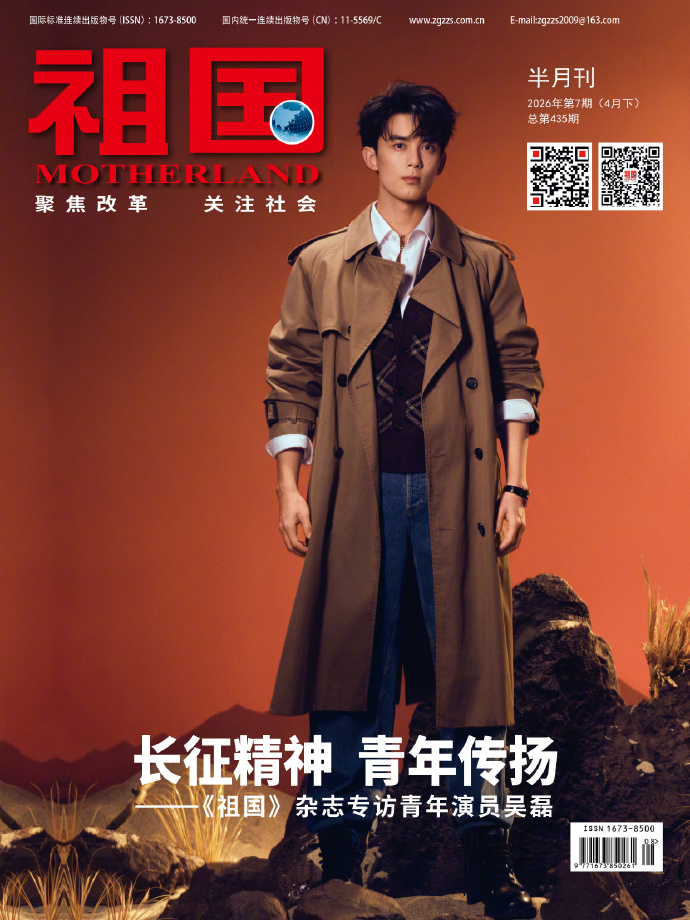
The Chinese magazine "Motherland" (祖国杂志) has featured Wu Lei on its cover and conducted a photoshoot with him. This is the first time a celebrity has graced the cover of the patriotic magazine in its 18‑year history. With this move, the editorial team aims to embody the spirit of youth in the new era. The occasion coincides with widespread celebrations in China marking the 90th anniversary of the Long March of the Red Army (Chinese). This event, which took place in 1934–1936, was a strategic retreat from the encirclement by Kuomintang troops from the south to the north of the country, covering approximately 12 500 km. According to Chinese data, out of roughly 200 000 Red Army soldiers who took part in the march and subsequent reinforcements, just over 50 000 survived by the end — on average, only one in four participants made it through. In China, the Long March is considered a victory. What is "Motherland" (祖国杂志)? The magazine is notable for having been founded in 2007 by Li Desheng - a pioneer revolutionary, in many ways the embodiment of the Chinese revolution, who lived into the 21st century. He was born in 1916 and died in 2011; he joined the revolution at the age of 13, took part in the Long March and all subsequent wars, including the Korean War. Afterwards, he became head of the Political Department of the People’s Liberation Army of China (PLA), and from 1973 was elected deputy chairman of the Central Committee of the CCP - in short, an elite figure with a commissar’s philosophy. At the height of the Cultural Revolution, he supported the “outstanding proletarian policy” and prioritised political struggle over technological progress. Later, he pursued a cautious political course and retained power even after Deng Xiaoping’s reforms began.
In 2007, at the age of 91, Li Desheng founded "Motherland" to promote patriotism. The magazine was actually established by the All‑China Association of Patriotic Projects, which Li Desheng then headed. It is a state institution and a state publication. Being featured in it is seen as official recognition - the cream of the crop in terms of ideologically sound content and lifestyle direction. Here is how the magazine describes itself: "An important publication founded jointly by the older generation of proletarian revolutionaries, dedicated to promoting patriotism, serving the country and preserving the ‘red gene’. Over the years, ‘Родина’ has maintained the right direction in its publishing activities, upholding the banner, keeping pace with the times and actively disseminating the Party’s line, principles and policies, enabling readers to gain a deep and timely understanding of the current spirit and information." The cover of "Motherland" has consistently featured political and military leaders, role models of their era and pillars of the nation. This time, the magazine has made an exception by selecting Wu Lei, primarily because of his youthful qualities - "righteousness, energy and confidence" - as well as the positive energy he radiates as a young actor. According to Chinese media, this unprecedented recognition of Wu Lei is not only a credible confirmation of his professional qualities but also the highest praise for his values and sense of responsibility, perfectly embodying the image of a young person of the new era.
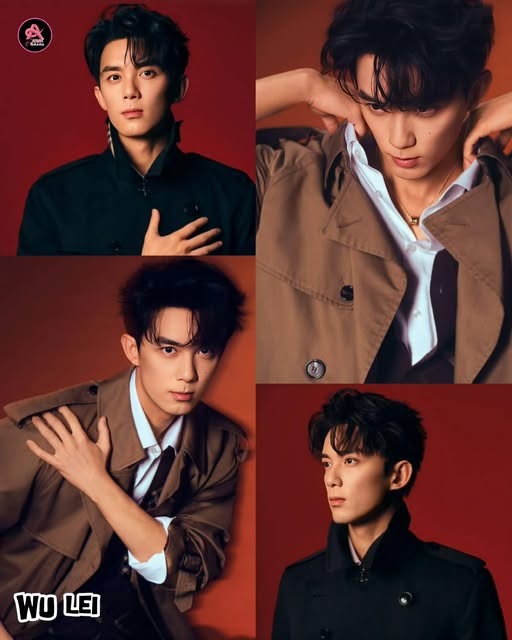
Wu Lei has been described as “根正苗红” — meaning “right roots and red sprouts”. This term dates almost back to the Cultural Revolution and signifies that a person has the correct class background and an impeccable political biography. “Right roots” refers to belonging to the "red" classes (workers, poor and middle peasants, revolutionary military personnel, soldiers and families of fallen heroes). "Red sprouts" means being born and raised "under the red flag" (of the Communist Party), with unwavering faith and no harmful ideological influence. In the photos and interview, Wu Lei appears dressed in a classic Burberry outfit, complemented by BVLGARI jewellery, blending a sense of contemporary bourgeois style with patriotism. In this way, Wu Lei embodies the magazine’s main theme: "Passing the Baton: Promoting Volunteering". Wu Lei, 26, has been in the industry for 21 years. He enjoys an impeccable reputation, with no negative press or scandals. Off‑screen, he is actively engaged in public activities, promoting a healthy lifestyle and using his influence to guide young people towards history and a love for their country. A video interview with Wu Lei (full text)video + english subtitles is available on YouTube here. video + fotoshoot + russian subs: Wu Lei: Hello, readers of "Motherland" magazine. I am actor Wu Lei. Question: Starting as a child actor, you grew into a young artist capable of playing leading roles. As your life experience has increased, how has your definition of a "good actor" changed? Wu Lei: When I was little, I didn't have a clear idea of acting — it was all vague. But now, I want to create good roles. Roles that can touch the hearts of the audience. I believe that acting well, being a good person, and creating characters that resonate with the audience — that is what makes a good actor. Question: I heard you enjoy cycling. What do you like most about this sport? Wu Lei: Peace. For me, it brings peace. Because cycling is very relaxing. It allows you to clear your mind. There's no pressure, just peace as I ride forward. Just pedaling. Question: In works such as "My Country, My Parents" and "Northwest Years", you played soldiers and revolutionary youth. To portray these characters well, did you do any special preparation? And what message did you most want to convey to the audience? Wu Lei: First of all, I needed a unified understanding of that historical era and that historical period. Then I needed to read appropriate materials. I think researching sources is very important. When filming "My Country, My Parents" and "Northwest Years", I traveled to the hometowns of the characters I played and to the places where their revolutionary activities took place. I went there to study the local landscape, culture, and customs. I think that helped me make my roles better. And through these portrayals, I wanted to convey to the audience that the peace we have now was hard-won. Without the sacrifices of the revolution's pioneers, we wouldn't be where we are today. Question: This year marks the 90th anniversary of the victory of the Long March. At such a significant moment, how do you feel about taking part in the photoshoot for "Motherland" magazine? Wu Lei: I am very excited to take part in this photoshoot. For me, it is a recognition. I hope to study together with the readers and once again properly get to know this period of history. Question: During today's shoot, we connected with the past through the lens and walked through many Long March stories. What left the deepest impression on you? Wu Lei: I was deeply impressed by the fact that we recreated the scene of the Zunyi Conference in 1935. When we were filming on the set, I felt that my back was very, very straight. Because I felt that my whole body was filled with glory and passion. Question: How do you understand the spirit of the Long March? In the present, what is the significance of preserving and promoting this spirit? Wu Lei: My understanding of the Long March is this: maintain the determination to win and never give up. I think this greatly inspires me and inspires today's youth. When we face difficulties, we must turn the tide and go against the wind. We must never give up. Question: What qualities should today's youth embrace on this new Long March forward, realizing the great rejuvenation of the Chinese nation, so that they can take on the mission of the era? Wu Lei: Never give up, never lose hope. Stay positive and be good young people. As for me, I have always been guided by three sentences carved on the wall of the Film Academy: Learn from the people, Serve the people, Be an artist for the people. These three sentences have always inspired me. Question: How should today's youth best connect individual development with national development and the needs of society? Wu Lei: For me as an actor... I would like to create more works with positive energy and pass that positive energy on to the audience. I believe that from one spark a flame will ignite. If everyone does their own job well and stays positive, then - as the saying goes, "if the youth are strong, the country is strong" - our country will become more and more prosperous. Question: As a role model for youth, beloved by them, what would you like to say to them? How would you encourage everyone to preserve the traditions, the spirit of the Long March, and fulfill their duties? Wu Lei: I wouldn't call myself a role model. I would just say: work hard. Acting well and being a good person has always been my aspiration. Question: With the continuing development of the country and progress, this year opens the 15th Five-Year Plan. What wishes would you make for our great motherland? Wu Lei: I wish our great motherland prosperity and strength. To be born in such a peaceful and powerful country - I am truly happy and fortunate. Question: What small habits do you always keep? Wu Lei: Working out. Question: What is your favorite saying or proverb? Wu Lei: Act well and be a good person. Question: What goal have you set for yourself today? Wu Lei: To continue acting well and being a good person. Question: When will your next cycling trip take place? Wu Lei: I don't know yet. Question: If you had a chance to say one sentence to yourself ten years from now, what would you say? Wu Lei: Did you act well and were you a good person? According to Russian law, we are obligated to warn users that Instagram and Facebook are owned by META Platforms Inc., which is considered extremist under Russian law and its activities are prohibited in Russia. |
|
| Категория: News | | |