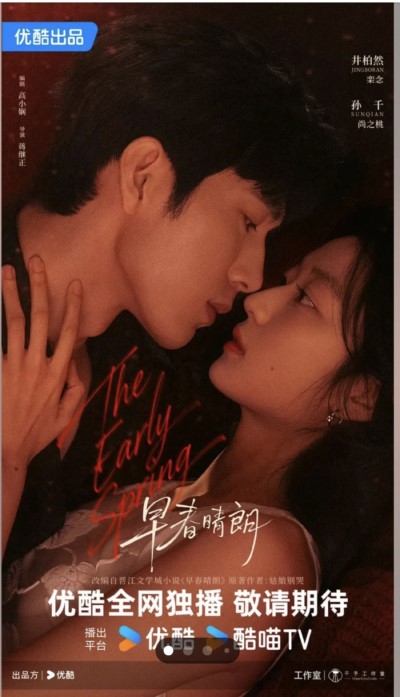


Drama «The Early Spring»: outstanding results on a modest budget2026-08-31
Chinese drama release schedule for 2026 


For the English version, we use automatic translation with minor editing. We apologize to our dear readers for any errors. | |
|
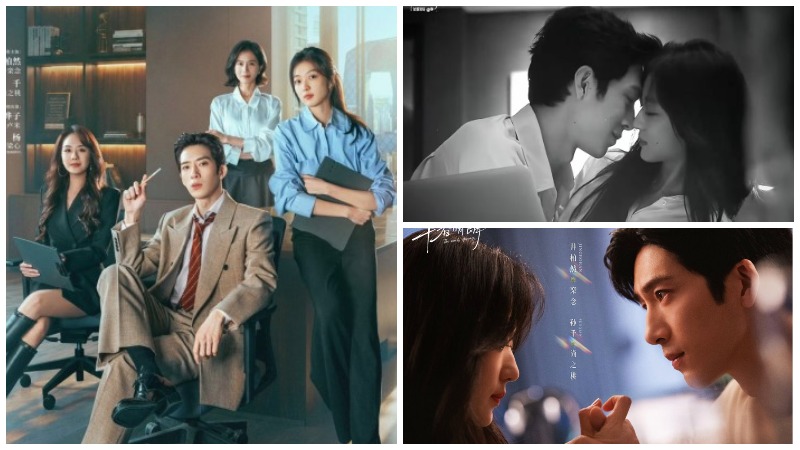
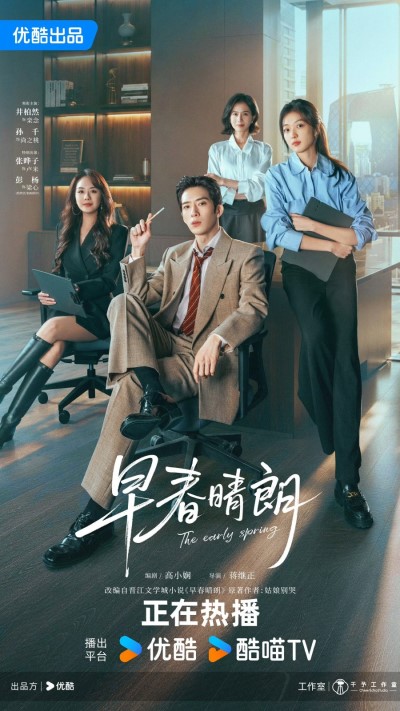
On 26 August, the urban romantic drama «The Early Spring» (早春晴朗) premiered on Youku. To date, 11 episodes are available, with the 12th now airing – meaning the 24-episode series has reached its halfway point. Starring Jing Boran and Sun Qian. In brief, the plot summary (for those who haven't read the novel) appeared, at first glance, rather formulaic: an office romance between a junior employee and a wealthy, domineering boss, with the protagonists overcoming various obstacles to achieve domestic bliss. One immediately envisions the standard template for an office take on the Cinderella story. Well, Ok, Cinderella is Cinderella, and CEO is CEO. However, the world built within this fairly traditional trope turned out to be quite unconventional. Over the past five or six days, the drama has become one of the most talked-about – and divisive – projects of the season. Read more:
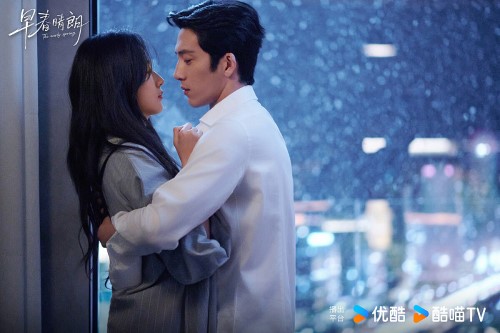
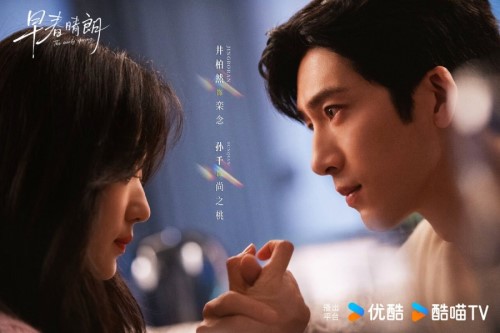
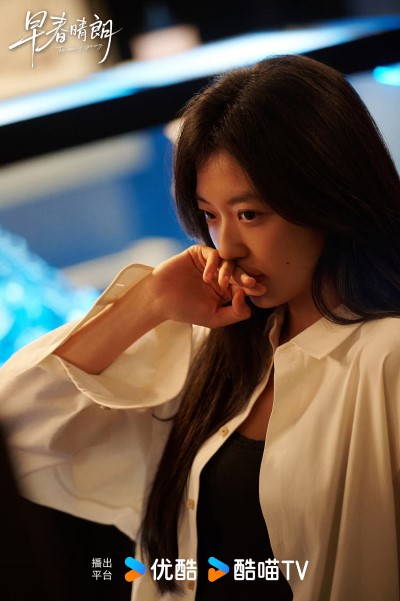
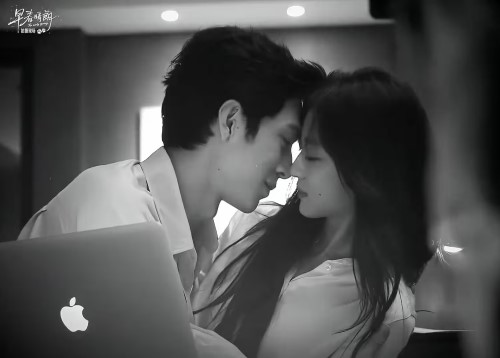
For starters, we have two adults who take responsibility for their own choices. The female lead is no shrinking violet; she makes her own decisions and has a clear-eyed view of her goals and interests, rather than simply following the lead of a domineering male hero. In the episodes aired so far, there is no coquettishness, no surprise at the obvious, no wide‑eyed stares, no artificial cute grimaces as if the heroine were 13 years old, and there seem to be absolutely no instances of the heroine falling into the hero's arms, with the hero supporting her by the waist and simultaneous slow motion. For that alone, Taiwanese director Jiang Ji Zheng deserves a medal. The leads' relationship begins with semi-drunken sex, but despite the alcohol, both freely and equally say "yes" to each other – and continue to make their own decisions about how the relationship progresses. Neither wakes up in horror, checks under the covers to see how undressed they are, or sneaks out trembling with fear. in short, they do not come across as crazy characters from a standard Asian drama. Thanks for that to the creators. The characters are allowed to be people with varying degrees of charm, with their own insecurities and fears, rather than simply ticking boxes for what an "ideal relationship" is supposed to look like. Second, the office setting and workplace dynamics come across as quite realistic. There are no cartoon villains – just ordinary employees, with ordinary competition and office politics. Not demonic, just human. That makes the characters' decision to keep their romance secret entirely understandable. We all know how an office romance between a boss and a subordinate is viewed – the subordinate is either seen as having gained everything or lost everything, and is forever scorned in professional circles. So it's either get married straight away, or keep the relationship private until the two of them figure out where they stand. And the way it's all shown – stolen kisses on the stairs, hands brushing in the lift, designated "Fridays" for dates – feels authentic. Many who have been through such a romance will likely recognise it. Third, there's the cinematography. The production values are solid. Perhaps the relatively modest budget meant the team couldn't afford lavish sets or digital backdrops, but the result is a classic, grounded aesthetic – realistic shots and a lived-in atmosphere. The director and cinematographer draw on old-school filmmaking techniques, shading what's unimportant and using light and composition to emphasise what truly matters. The camera serves the mood of the scene rather than just documenting it. To be honest, Chinese dramas have recently gone overboard with CGI – it looks pretty, but sometimes feels like a children's colouring book. When something feels more organic, it's a relief for weary viewers. And this drama feels genuinely alive.
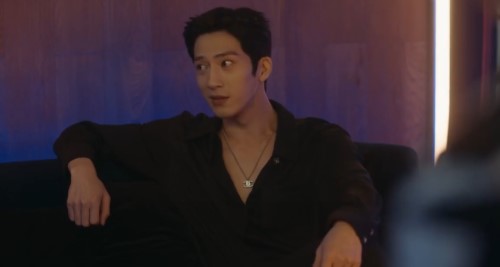
Interestingly, the budget was so tight that the male lead, Jing Boran, brought in 120 items from his own wardrobe to give his wealthy character some style. The real standout turned out to be his shirts, unbuttoned three or more buttons from the top. Sharp-eyed viewers noted that the series is set around 2013, when fashionable heartthrobs indeed wore their shirts that way.
To cut costs, "overseas" and Tibetan scenes were filmed in Beijing and Harbin – the team simply couldn't afford to travel. However, an intimacy coordinator was brought in for the intimate scenes, which is rare for Chinese dramas. It's not entirely clear what was done by the director and cinematographer versus the coordinator, but the results are very well executed. Critics' main grievances so far are: 1) The characters themselves – some feel their behaviour doesn't match how people "should" act. But that's a question for the novel's author and screenwriter. 2) The lead actor, Jing Boran – some say he doesn't quite measure up. That's debatable. In our view, he fits well with the rest of the cast and the overall tempo of the series. So the drama is at its halfway point, and the most intriguing part lies ahead. The protagonists are meant to separate and then reunite. In the second half, the risk of slipping into standard formulas is dangerously high. We will be watching closely to see how it all ends.
For now, «The Early Spring» reached 10,000 points on Youku within three days of airing – a record for an urban drama. Its market share stands at 23.5% and continues to grow. Thanks to its simultaneous release on Netflix, the drama entered the global top 6 on the platform. It made the top ten in 54 countries and regions, and has already taken first place in Singapore, Vietnam, Thailand, Indonesia, Taiwan, and Hong Kong. Advertising revenue has been equally impressive. The series set a Youku record for first-day ad revenue. By episode 11, 12 brands had been placed in 41 ad integrations, totalling 405 seconds. Based on these figures, it's safe to assume that production costs (particularly given the series' low-budget nature) have already been recouped.
According to Russian law, we are obligated to warn users that Instagram and Facebook are owned by META Platforms Inc., which is considered extremist under Russian law and its activities are prohibited in Russia. |
|
| Категория: News | | |